
Objectives
- Define common terms related to authentic child assessment.
- Practice observation across developmental domains.
- Describe the link between authentic assessment and planning for young children.
- Devise an observation plan for either a child in your program or based on a video of a child.
Important Definitions for this Course
Authentic assessment is an ongoing process of evaluating a child’s development. It also includes planning and implementing activities to support better outcomes for children. Authentic assessment happens in familiar settings, with familiar people, and it happens over time1.
A framework of principles and guidelines for practice that promotes optimal learning and development for young children. It is based around what is known about general processes of child development and learning, what is known about the child as an individual who is a member of a particular family and community, and what is known about the social and cultural contexts in which the learning occurs2.
Uses information from a variety of sources.
Occurs as a child interacts with familiar materials, people, and activities.
Is a natural part of what teachers do every day.
Helps teachers plan, measure progress, work with families, and individualize the curriculum.
Helps us observe all areas of a child’s growth and development.
Universal Design for Learning (UDL)
Universal Design is the design of products and their environments to be useable by all people, to the greatest extent possible, without the need for adaptation or specialized design.
Ron Mace, Architect (1942-1998)

In early childhood classrooms, early childhood professionals should consider the needs of all children, including those with different learning styles, social and economic backgrounds, minority languages, religions, or sexual orientations. When implementing UDL, children should be able to engage with learning opportunities across all areas they have access to – classrooms, playgrounds, gross motor rooms, etc. Teachers can gather information about children’s strengths, preferences, and interests by observing and documenting children in all areas of their development. We will dig deeper into UDL as we explore how to use assessment results to inform planning in a future assessment training module.
Planned Observation Can Be Helpful
Observations will help you step back, make informed decisions, and give you knowledge that can be communicated to the child’s family as well.
Guidelines for Accurate and Objective Recording of Observations
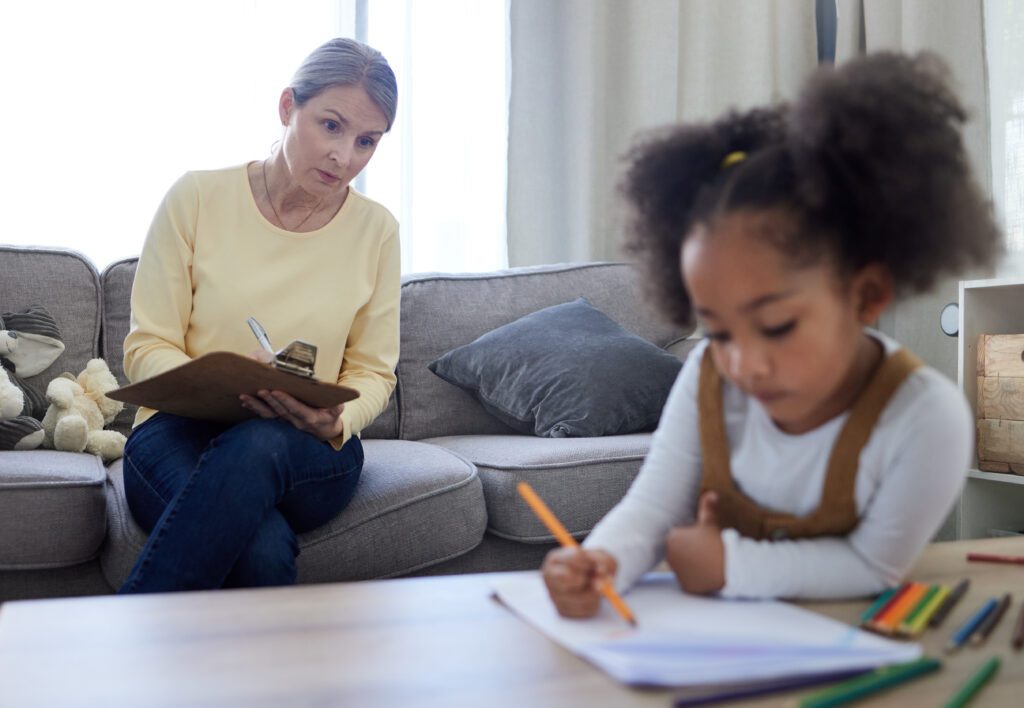
When conducting observations that are objective, you record only the facts. What you see and hear, not what you think is happening.
Objective observations include:
- Descriptions of actions
- Descriptions of children’s vocalizations
- Direct quotes of children’s language
- Descriptions of facial expressions and gestures
- Descriptions of creations (e.g., stacked blocks, scribble drawings, finger-painted pictures)3
When conducting observations that are subjective, you record what you think you see and hear, or what you perceive going on. Not actual facts.
Subjective language to avoid3:
- Intelligence: smart, slow
- Feelings: angry, mad, sad, upset, happy
- Intentions and preferences: wants, likes, loves, “because”.
- Labels: bored, distracted, cooperative, aggressive, hyperactive, helpful, withdrawn, shy, outgoing, fussy, bad, good, silly, cute, beautiful
- Evaluations: good job, bad job
- Time and amounts: always, never, a lot, long time, short time
Useful and Accurate Observations
- Specific- Instead of writing George jumped, adding how far or how high George jumped would help you see the progress George makes in the future.
- Evidence-Based – Document only what you see and hear.
- Short – Use short phrases rather than complete sentences. You can use a child’s initials instead of writing their name. Develop a system of abbreviations with the observers in your center or room, such as QA for quiet area or DP for dramatic play.
Include counts and measurements like:
- Depth: Is this a new skill for the child, or is this a skill that the child has been practicing for a while?
- Frequency: How often do you see this skill or behavior? If you are observing a child who has tantrums, 1 a day before naptime is much different than 10 per day.
- Duration: How long does the behavior or skill last?
Examples of Objective and Subjective Observations
Subjective
Jen always hogs the computer.
Pat does a good job of hanging up his coat.
Alice acts bored during storytime.
Objective
Jen plays on the computer for 20 minutes until asked to share with another student.
Pat takes off his coat by himself and hangs it on the hook in his cubby.
Alice sits on her square during storytime, whispering in Susan’s ear, turning her back to the book and taking her shoes off and on.
Collecting and Organizing Observations for an Assessment
Anecdotal records are brief notes teachers take while observing children. The notes document a range of behaviors in areas such as literacy, mathematics, social studies, science, the arts, social and emotional development, and physical development. When recording observations, it’s important to include a concrete description and enough details to inform future teaching strategies.
Example
A statement like “The student built a tower from colored cubes, creating an AB pattern after looking at a card that showed a similar alternating pattern” provides concrete evidence.
The C-L-I-P-S system uses anecdotal notes, organized in a quick, easy way.
Teachers keep a manila folder with a page for each child. Each child’s page has 5 columns:
- C (Cognitive)
- L (Language)
- I (Interactions)
- P (Physical)
- S (Social-emotional)
The observing teacher carries a pad of sticky notes in their pocket. When they see a child doing something noteworthy during the day, they write it down on a sticky note along with the appropriate letter.
Example
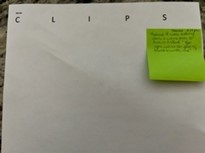
This note says, “Noticed L was sitting alone and went over to him and asked, ‘Do you want to come play trucks with me?’” James’ name is in the top left corner of the C-L-I-P-S sheet but should also be included on the sticky note. You can also see that the observation note is dated with the time on it, so you have a reminder for when it happened. We have placed this observation in the S column for Social-emotional. Is there another developmental domain this observation might be used for?
Checklists are an efficient way to collect information about a child’s development. However, unlike anecdotal notes or running records, checklists do not provide rich details or context. Want to learn more about checklists? Check out this article on checklists and rating scales.
Example
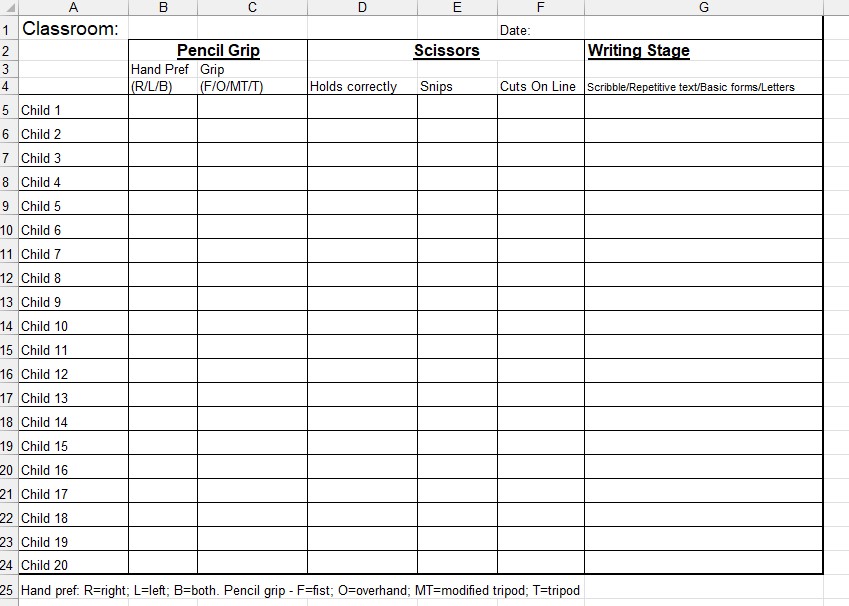
The checklist pictured has places to record information for 20 children. There are columns for teachers to check off specific skills, such as pencil grip, scissor grip, and the writing stage.
A running record is a detailed narrative account that describes a child’s behavior in sequence, as it occurs.
Example
This example was taken from a 2016 YouTube video (Running Record and Anecdotal Notes Part 2 20:03) created by Sue Griebling. Watching the full video is helpful but not required.
- Maggii enters the classroom standing behind her mother. She is peaking around her mother’s leg with one eye. Her mother takes her by the hand and guides her into the classroom in front of her. Mother turns and leaves quietly. Magii stands motionless with her eyes cast downward.
- Ann greets Magii with “Good morning, Magii” and reaches out to grasp her hands. Magii’s body stiffens. She pulls away from Ann’s embrace. Ann releases her hands.
- Magii goes to the cubbies on the outskirts of the classroom. She does not make eye contact with the other arriving children. She looks down at the floor. She puts her lunch away and walks over to the group area. She sits on the rug circle and looks at her hands until the rest of the children are gathered. She does not respond to the other children’s activity as they come to the circle.
- Magii looks up as the teacher begins to speak. She sits at the circle, motionless and silent, while the teacher talks to the children about the day’s activities. The teacher asks, “Who wants to work with blocks?” Magii does not volunteer. As the teacher asks the same questions about the various activities, Magii does not respond. The other children leave the circle one by one until Magii is the only one left.
- “Would you like to work with Luciano and the puzzles?” the teacher asks.
- “Yes, I don’t want to,” Magii replies in a barely audible voice. She gets up, walks to the small-toys area, chooses a Lotto game, spreads the cards out on the table, and sits down with her back to the center of the classroom. She looks closely at each picture card for a second or two before putting it in place. She completes all 12 matches on 2 cardboard sheets.
- Ann asks, “How many ducks are there? and points to a card.
- Magii answers “Two” without hesitation, holding up her hand with her middle, ring, and pinky fingers bent down.
Way back in 1992, Judith Arter and Vicki Spandel from the Northwest Regional Educational Laboratory defined the portfolio as “a purposeful collection of student work that exhibits to the student, or others, her efforts or achievement in one or more areas”. Portfolios can contain all sorts of examples of the student’s work, such as:
- Anecdotal notes
- Writing samples
- Photographs
- Self-portraits
- Fine motor skills
- Math skills
- Literacy skills
- Science
- Art
Example
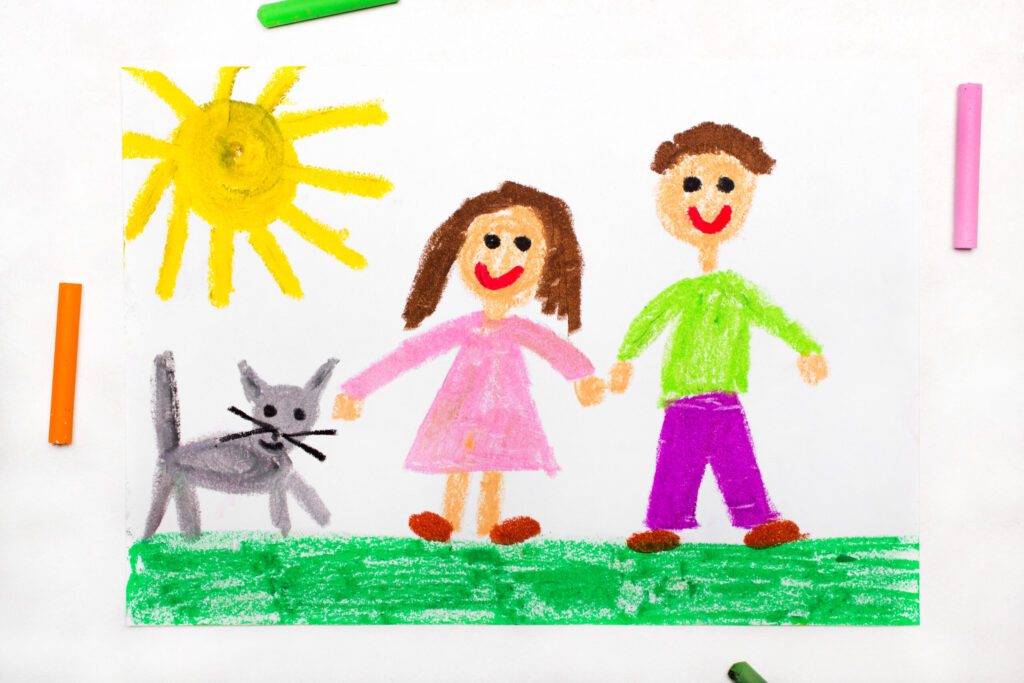
A teacher collected this student’s self-portrait painting for their portfolio as part of an observation. It could be to demonstrate whether the child’s art skills are improving (or haven’t improved since the beginning of the year). Can you think of other developmental domains or Early Childhood Standards this artwork could represent?
A frequency count is an informal observation method that is used to gather information about a child’s interests, social interactions, play patterns, and temperamental traits. As the teacher observes the children at play, a tally mark is made every time the noted behavior or action occurs within a set time frame. In their 2018 textbook Observation and Assessment in Early Childhood, Gina Peterson and Emily Elam point out the flexibility of frequency counts: they can be used to track undesirable or challenging behaviors as well as ideal or positive behaviors.
Example
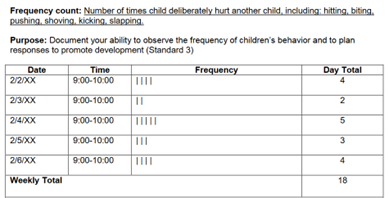
The frequency count sheet pictured was used during observation to record how often the subject child deliberately hurt another child. It is set up so that the teacher can make a hashmark each time they see the behavior. This sheet includes data from 5 days as well as daily and weekly totals.
Use an Antecedent-Behavior-Consequence (ABC) chart to record behavior. This involves writing down:
- Antecedent: What happened just before the behavior occurred that might have triggered it? This could include events. environmental factors like the physical setting or cues, or triggers such as instructions, emotional states, or specific times of day.
- Behavior: The observable action you’re examining or targeting for change. What did the student actually do?
- Consequence: The event or outcome that followed the behavior. Consequences can reinforce the behavior if they are positive or discourage it if they are negative.
The term consequence can be tricky because we often think of it as meaning punishment. In this case, consequence simply means the result of the behavior.
Example
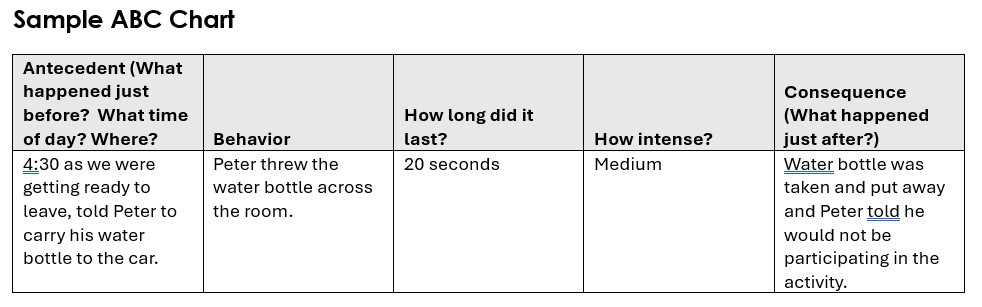
The sample ABC chart pictured to the left includes 5 columns with important information related to a child’s behavior. The columns and their accompanying data are:
- The Antecedent (What happened just before? What time of day? Where?): 4:30 as we were getting ready to leave, told Peter to carry his water bottle to the car.
- Behavior: Peter threw the water bottle across the room.
- How long did it last?: 20 seconds
- How intense?: Medium
- Consequence (What happened just after?): Water bottle was taken away. Peter was told he would not be participating in the activity.
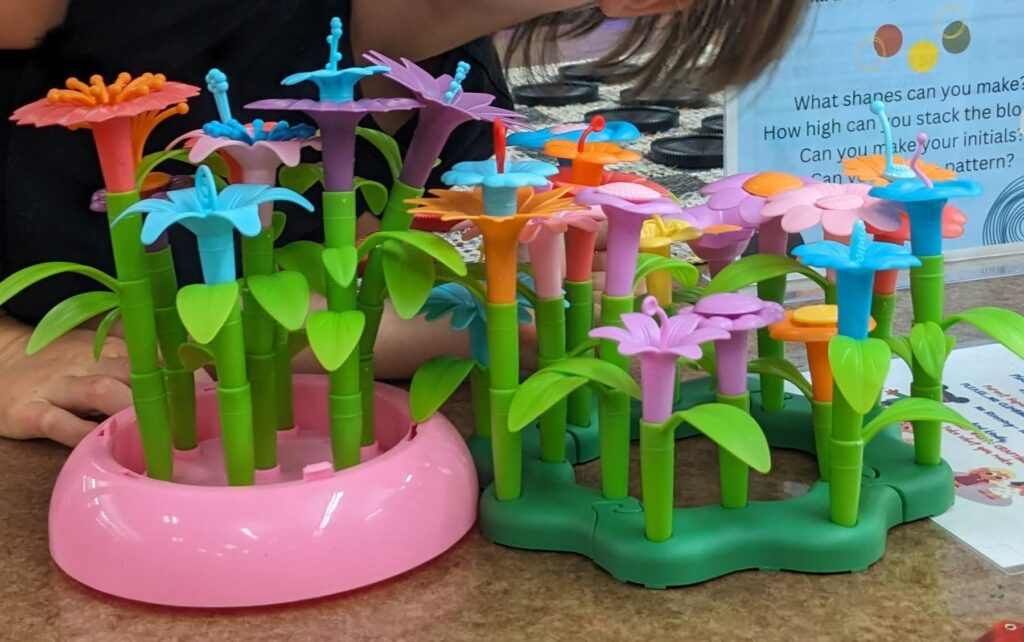
Capturing children’s thinking using videos or photographs enables teachers to examine children’s work later on, when they have time to reflect on what children know and how children understand it. They can also be shared with the child’s family as part of a portfolio.
Example
Authentic assessment relies on the observations, reports, and judgments of familiar and knowledgeable caregivers with whom the child has an attachment relationship. Interviews with families and children provide a wealth of detail, information, and explanations behind actions, thoughts, and behaviors. Families play a pivotal role in sharing information about their child and must feel comfortable and valued as members.
References
1Milenova, M. (2022, 05 03). Fundamentals of Authentic Assessment. Retrieved November 3, 2025 from University of Minnesota Center for Early Education and Development: https://ceed.umn.edu/fundamentals-of-authentic-assessment/
2National Association for the Education of Young Children (NAEYC). (2020, April). Position Statement: Developmentally Appropriate Practice. Retrieved Novemeber 3, 2025 from https://www.naeyc.org/sites/default/files/globally-shared/downloads/PDFs/resources/position-statements/dap-statement_0.pdf