
Objectives
- Brainstorm and plan strategies for making assessment part of the daily routine.
- Identify a process for choosing an assessment (if you have that option) or using an assessment (if you already have an assessment system in place).
- Incorporate assessment data in lesson planning.
Introduction Reflection
Strategies for Collecting Observations
Assessments
An early childhood assessment is a process of gathering information about a child, reviewing the information, and then using the information to plan educational activities that are at a level the child can understand and is able to learn from. For this series of modules, we are focusing on classroom/instructional assessment.
Components of High-Quality Assessment
There are several critical steps in designing this component of your continuous assessment system. First, programs must plan to gather information for all the major developmental domains or dimensions of development. The National Education Goals Panel (Kagan, Moore, & Bredekamp, 1995) identified five critical dimensions:
- Physical well-being and motor development
- Social and emotional development
- Approaches toward learning
- Language development
- Cognitive and general knowledge
Your program may call the learning domains by different names, but all need to be included in your continuous assessment system. Even if your early childhood program emphasizes one or two developmental areas more than others, research demonstrates that the domains interact to affect learning.
Assessment Cycle
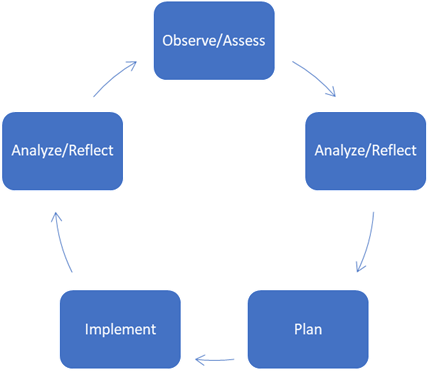
Observe and Assess
Observe the children using your assessment tool.
Analyze and Reflect
After observing and assessing children, it is important to reflect on the information before planning.
Plan
As you are working on your lesson planning, it is helpful to review recent assessment data for each child and ask yourself these questions:
- What are some strengths?
- What interests do I see? Are there any classroom areas they love or avoid?
- What developmental progress have I noticed?
- What next steps will support this child?
Implement
After planning and creating lesson plans is complete you will implement the planned activities.
Analyze and Reflect
After implementation, you need to reflect on what worked, what did not work, and any changes to make before starting again.
Using the Kentucky Early Care Standards
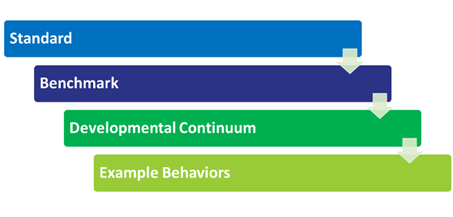
Standard – A general statement that represents the information, skills, and/or characteristics that a child should demonstrate at the end of the age span covered.
Benchmark – A concept or skill that is a subset of what is addressed within the standard. Put another way, Benchmarks collectively describe the specific skills, knowledge or characteristics included within a standard. Benchmarks are not listed in any specific order, either in importance or in a developmental order.
Developmental Continuum – A predictable but not rigid sequence of accomplishments that describes the progressive levels of performance in the order in which they emerge in most children, based on current research. Developmental Continuum items describe how skills related to a Benchmark typically emerge or progress.
Example Behaviors – Observable “samples” of what children might do as they demonstrate accomplishments at each level of the Developmental Continuum, but not a definitive list of how a child might demonstrate a specific accomplishment or an exhaustive inventory.
The Developmental Continuum and Example Behaviors help educators identify skills most likely to occur next in the continuum and provide examples of what skills or knowledge a child might demonstrate at specific ages. These illustrations are useful to adults as they seek to understand and plan learning experiences to facilitate children’s development.
Universal Design for Learning
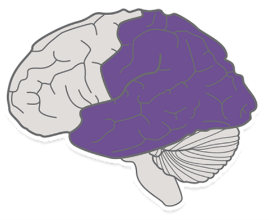
Representation: UDL recommends offering information in more than one format. Providing text, audio, video, and hands-on learning gives all kids a chance to access the material in whichever way is best suited to their learning strengths.
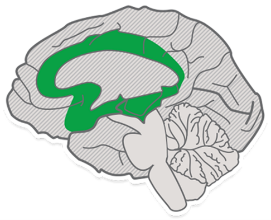
Engagement: UDL encourages teachers to look for multiple ways to motivate students. Letting kids make choices and providing activities that feel relevant to their lives are some examples of how teachers can sustain students’ interest. Other common strategies include making skill-building feel like a game and creating opportunities for students to get up and move around the classroom.
Action and expression: UDL suggests giving kids more than one way to interact with the material and to show what they’ve learned. Some children may prefer telling you about the building they built with the blocks, while others may want to show you.