
Objectives
The information in this module will equip providers to promote quality practices in the classroom by using developmentally appropriate furnishings and materials. This training will offer evidence-based information and short vignettes to demonstrate intentional teaching strategies when engaging young children in play.
Early Care and Education professionals need to have specific knowledge, competencies, and characteristics to work effectively with very young children. This training promotes Kentucky’s Early Childhood Core Content, specifically addressing the areas of Learning Environments and Curriculum. The competency speaks to how positive interaction with age-appropriate materials fosters a child’s physical, cognitive, communicative, creative, and social development.
- Identify age-appropriate materials for children at varying skill levels to support preschool children.
- Understand how materials support preschoolers’ cognitive, physical, and social-emotional skills.
- Design exciting interest centers that invite very young children to interact safely with materials.
Essential Elements to Support Quality
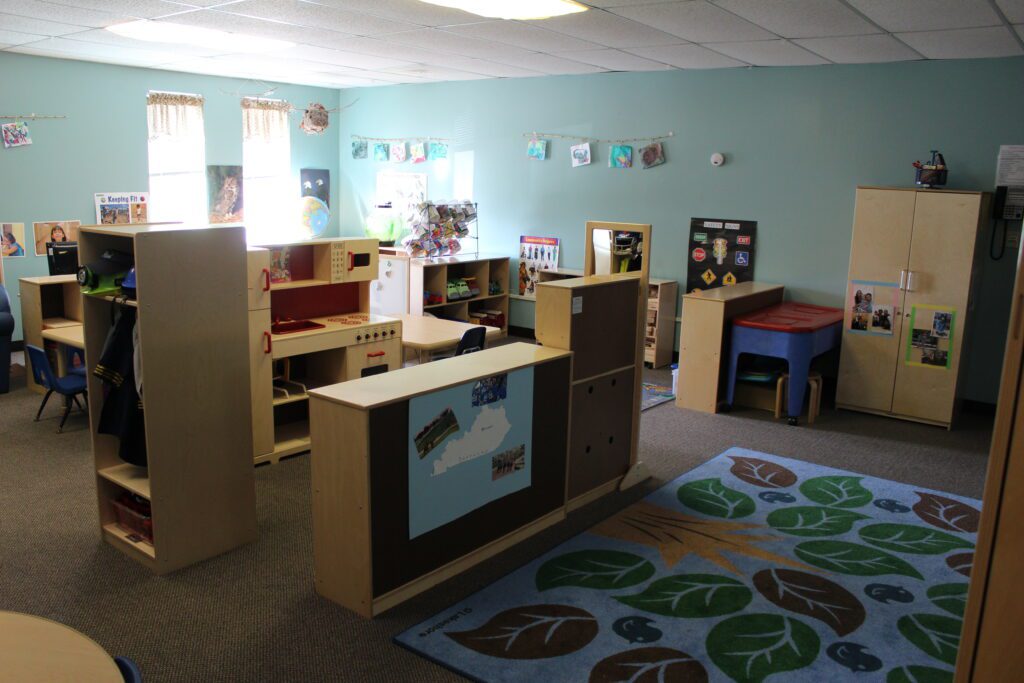
All early care settings should include the following essential elements to support and promote quality.
- Ensure all children are healthy and safe.
- Ensure all children have the opportunity to interact with peers, adults, and the community and build relationships.
- Ensure all children have a variety of experiences that engage them and allow them to use age-appropriate, hands-on materials within the learning environment.
In the end, whether you are an experienced early childhood professional or new to the field, you will be able to:
- Reflect on your own interest center’s design and create inviting, safe learning centers for preschool-age children.
- Recognize quality attributes of various learning materials and apply those to foster intentional learning moments.
- Review the list of tips and resources to enhance preschoolers’ play experiences.
- In the field of early care and education, we understand that young children are naturally drawn to inviting and exciting learning environments and experiences.
- Your role is critical because YOU determine the classroom design, and therefore the kinds of experiences children will have while in your care. You may ask: How do I arrange an effective learning environment for preschoolers? What materials will I need? How can I provide active learning for this age group?
- To help you create an environment that supports active learning for children ages 3 to 5, we will examine four (4) key components to set the stage for learning.
We will address how to:
- Design developmentally appropriate environments
- Discuss activities and play experiences
- Examine daily routines and transitions
- Share strategies to support and extend learning
In outstanding classrooms, teachers do more listening than talking, and students do more talking than listening. Terrific teachers often have teeth marks on their tongues.
Alfie Kohn
Designing Spaces for Preschoolers
Decades of research has shown that play is crucial to physical, intellectual, and social-emotional development at all ages. This is especially true of the purest form of play: the unstructured, self-motivated, imaginative, independent kind, where children initiate their own games and even their own rules.
David Elkind
What should an effective preschool environment look like?
- Inclusive of all children in your care, and provide them with a sense of belonging and comfort.
- Opportunities that encourage physical, cognitive, communicative, creative, and social development.
- Safe, free to explore and ask questions.
- Secure relationships with responsive teachers.
- At all times, the health, safety, and well-being of the children should be maintained.
- Research shows that in a well-designed environment, where children can concentrate on their work, play flourishes and becomes more elaborate.
However, a well-designed environment requires time, planning, and deliberation on the teacher’s part. Let’s get started!
Sketching Your Preschool Classroom
Sketch your room’s arrangement using the classroom sketch template provided here or in your handout. Include the interest areas you currently have available for the age group you serve.
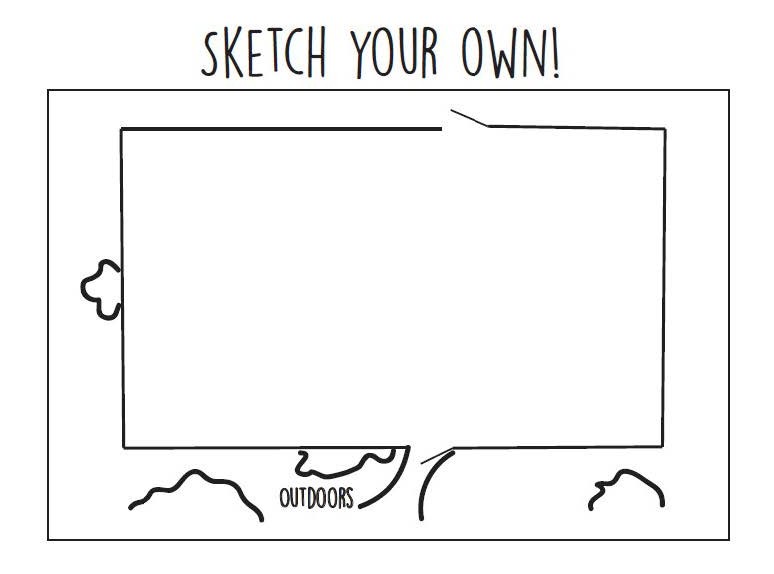
Once you complete your simple illustration, make a note or highlight the top two (2) areas you would like to enhance. Keep the sketch close by, as you will be asked to note ways to improve the areas you have highlighted.
These are the questions you should be asking yourself as you move through the rest of this module:
- Does my learning environment provide enough space for various activities to take place at once without causing stress or competition for space?
- Does my classroom provide a comfortable, cozy, and supportive environment for infants and toddlers to learn?
- Does the classroom setting provide children with opportunities to freely explore all the materials in a safe and healthy way?
Spaces for Learning
Defining spaces for specific purposes or for holding similar items is a good strategy to help prevent chaos. In the classroom, we would design well-defined areas, or “interest centers.” Interest centers are the exoskeleton of the classroom. They help protect the learning environment from chaos when done correctly.
Well-designed interest centers allow children to:
- work independently,
- use materials independently, and
- know what is expected.
Interest centers are a purposeful way of breaking up the classroom into specific areas. Each center – including the equipment and materials – should clearly convey what is to take place in that area.
The goal of an interest center is to allow children to learn the way they learn best -through play. They grant children time and freedom to manipulate, explore, and become familiar with materials at their own pace in a trusting, safe environment. In turn, this allows them to take those explorations to the next level.
Various skills and concepts can be learned in a variety of centers. For example, children improve their language and literacy skills not only by using books in the library center or using story props but also in the dramatic play area, where they can create menus, follow recipes, or write prescriptions as they role-play real-life experiences.
Whether children are developing typically or have special developmental needs, centers affirm that every child can learn and develop skills at their own pace. Centers allow you, as the teacher, to offer children various opportunities to discover, explore, and grow as learners in self-directed activities. Centers also allow children the freedom to pursue their interests while working with a wide range of materials in a healthy, safe environment. This means that a child who enters your classroom less than ready to learn will benefit most from a well-planned environment.
When arranging your space, keep in mind:
- Preschoolers need order, routine, and a choice of activities.
- Centers should have clearly defined boundaries with enough space for children to play and move around freely.
- You will need to provide quiet and active areas, homelike touches, and a variety of hard and soft surfaces.
- Organize the space so children can independently choose, use, and return materials, using labels or pictures in the children’s home language.
- Clear entrances and exits for each center need to be established.
- Post directions for the center management system, if applicable.
- Ensure there are enough materials for several children to play in the areas, and that duplicates of favorite toys are available to avoid disputes.
Revisiting your Sketch
Take a look at the classroom sketch you made earlier, review the areas you highlighted, and note what you would like to change.
Routinely check equipment and materials to ensure they are in good working order. Repair, remove, or replace any broken or torn items. Centers should be free of choking hazards with no toxic items, including plants and art supplies. Regularly check online or sign up for alerts from the Consumer Product Safety Commission (www.cpsc.gov) to stay informed about product recalls.
Materials, shelving, and storage containers should be washable. A cleaning and sanitizing schedule should be implemented to ensure cleanliness is maintained. Remember to store all cleaning products and hazardous materials under lock and key and away from children.
Don’t be afraid to modify your classroom if it isn’t working. Change is not unthinkable in the preschool classroom. When modifications occur, be sure to take the opportunity to discuss them with your class right away. This can be accomplished at group time by simply asking them if they observe anything different about the classroom.
Art Materials

This center provides creative outlets for the self-expression of children’s ideas, thoughts, and emotions. Children use design, drawing, painting, and sculpting to experiment with color, form, line, shape, and space.
Through experiences with tools such as crayons, colored pencils, markers, scissors, sponges, modeling clay, and a variety of paints and brushes, children increase their fine motor skills and hand-eye coordination.
When children are encouraged to choose their own paint colors, paper products, tools, and art materials, as well as when and how to use them, they are increasing their decision-making skills. Remember, it is the process of creating art, not the product, where children learn and increase all of these skills.
This area should be located on an easy-to-clean floor or surface and close to a water source. Equipment for the art center includes a table, chairs, an easel, and a storage shelf. You will also want to create a designated area for drying children’s creations.
Blocks
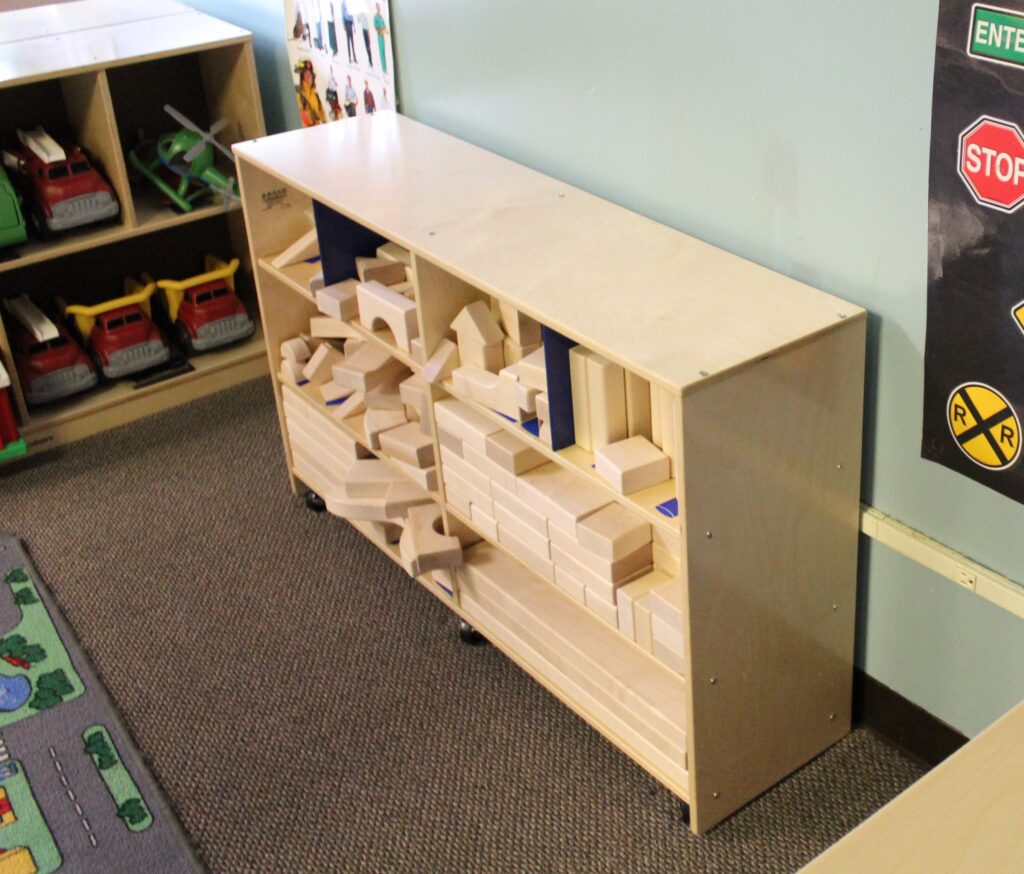
Having an area set aside for constructing and creating is an important part of a preschool classroom. Establishing a Block center meets this need. This area includes unit, hollow, stacking, interlocking, and foam blocks, as well as cardboard bricks. Accessories in the block center could include people, animals, and vehicles.
A vital key to creating a successful block center is to ensure you have enough materials. A good rule of thumb is to have at least 40 to 60 unit blocks for each child allowed in the block area. While playing in this center, children learn to manipulate objects, create structures, and work together. They deepen their understanding of relationships among size and shape, basic numbers, and geometric concepts.
In addition to sufficient materials, this center needs a large space, ideally located in a corner of the room, away from the main traffic area and from quiet centers such as the library. Materials need to be stored on low labeled shelves for easy access and clean-up. Smaller items need designated containers, while large items can just be placed on the shelf. A good tip for labeling is to make templates or take pictures of each type of unit block for sorting and easy storage.
Dramatic Play
In the Dramatic Play area, children are provided opportunities to practice pretend play as adults in everyday scenarios and a variety of careers. This type of play increases children’s knowledge of the world they live in while they explore an array of social roles.
This center should offer props like kitchen appliances, accessories, a table, chairs, clothes, food, and babies. This allows children to reenact their own family life. However, this center should not just be a “housekeeping” area.
If you observe children playing in this area, you will quickly see them accepting, creating, and assigning different roles and play, such as a restaurant or a grocery store. This shows how important it is to provide children with a diverse array of props to explore.
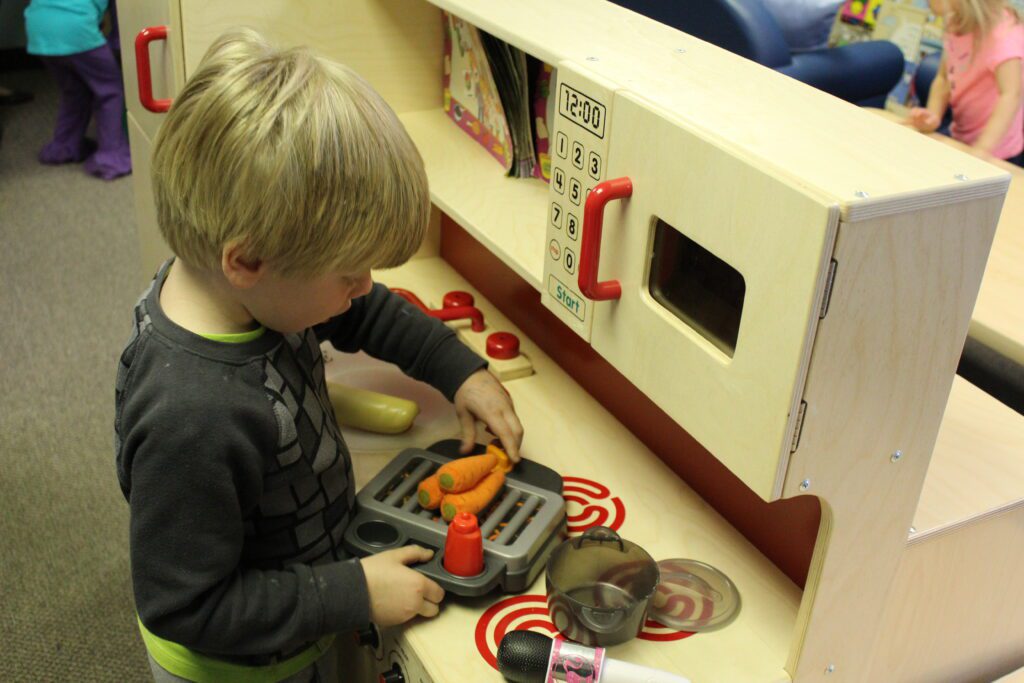
New props can be brought out on a rotating basis as children’s interests change or with ideas you are currently exploring in your class. This center is ideal for teaching children about other countries, cultures, and customs, especially those in your class. You will want to locate this center near the block area and out of the main traffic flow, as it promotes active play. All props should be clean – especially clothes – and all broken and torn items removed or replaced.
Discovery
When children are truly involved in the scientific process, they gain understanding, knowledge, and life skills. They deepen their awareness of what’s going on around them and how others contribute to their well-being.
Lillian Katz
A Discovery center enriches your preschool classroom by providing children with opportunities to explore, problem-solve, and ask questions. Materials such as magnets, balances, prisms, magnifying glasses, measuring cups, and thermometers are often displayed for children’s independent play.
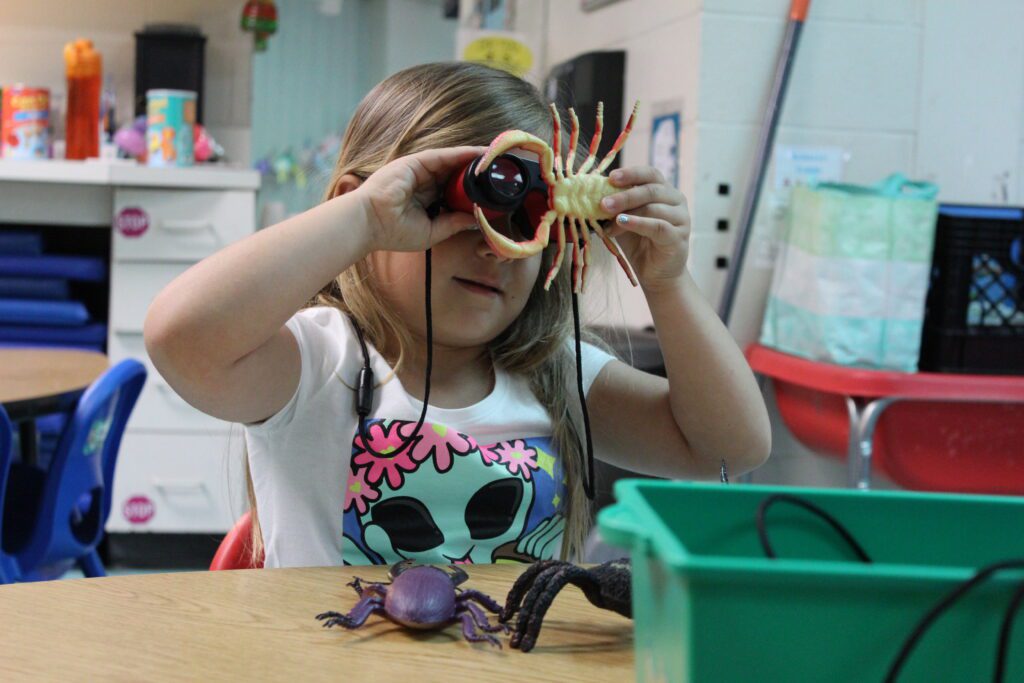
To foster appreciation for the natural world, include objects such as pinecones, shells, rocks, leaves, or an abandoned bird’s nest. Provide opportunities to grow plants and view insects. These activities bring the world up close and personal. Including a variety of items and activities enables children to participate in their own experiments, manipulate objects, and care for a classroom pet or non-toxic plants.
Adding in a sensory table provides opportunities for measuring, pouring, comparing, and creating. You can offer a variety of materials to explore, such as water, sand, leaves, snow, aquarium pebbles, and more. This area provides a soothing atmosphere for many children. You will want to ensure that children wash their hands before and after play. The table should be emptied, cleaned, and sanitized daily during water play. A well-organized area with minimal clutter will encourage children to explore and investigate. If possible, locate this area near a window and an electrical outlet.
Library
Good lighting and lively displays of readily accessible arrangements of books encourage children to stay in the library.
Neuman & Bredekamp, 2000
A purposeful and organized Library center is essential for every classroom. Having a clearly defined space where children can discover and explore all types of books helps children foster a love of reading. Include quality age-appropriate non-fiction, fiction, resource, and theme-related books. Choose non-stereotypical books that reflect children’s identity, home language, and culture.
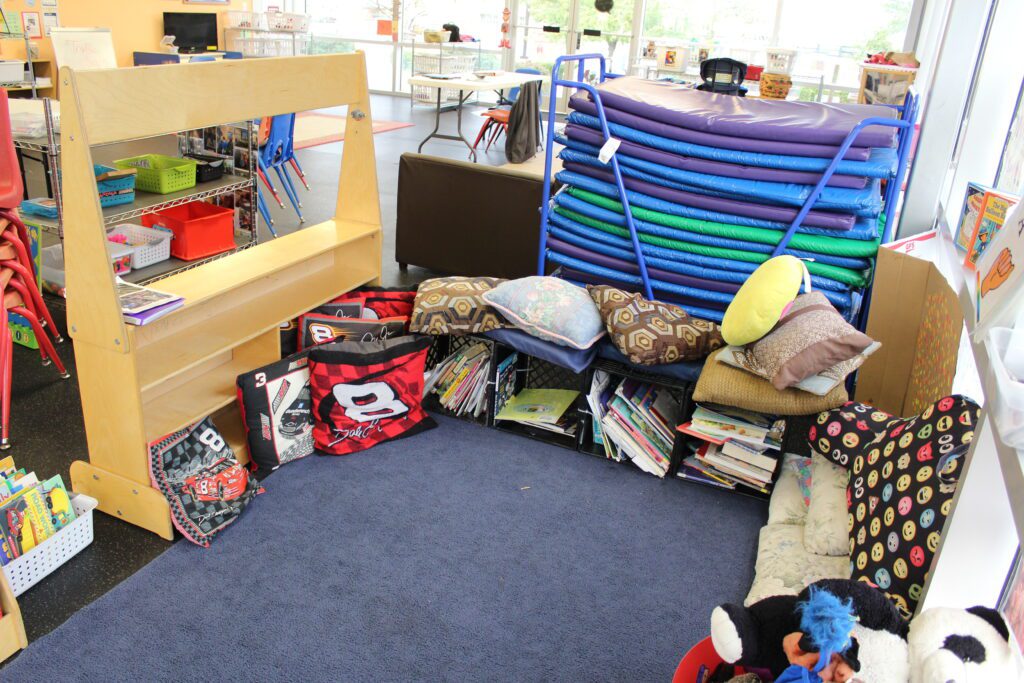
- Create a comfortable environment for quiet time.
- A cozy corner of the room away from active centers is a great place to set up a library.
- Use a colorful rug, floor cushions, bean bag chairs, a couch, or mats to create a variety of relaxing, comfortable seating options.
- Include soft lighting if the space allows.
- Hang a sheer canopy or curtains to further delineate the space and encourage quiet.
- Furnish with low bookshelves or book boxes that allow for easy access for all children.
- Display the books with the cover facing out.
- Stock shelves with bins to organize reading accessories such as puppets, felt board and pieces, story props, and stuffed animals.
- Decorate walls with environmental print, book covers, children’s art stories, photos, and poems.
A focus should also be placed on listening. To practice listening skills, children can use a CD player with headphones. You can use a jack box to allow more than one child to listen at the same time. Books on CD or other phonics learning materials help children develop skills in following a story and instructions. In this area, children learn concepts important for later success in reading, such as letter recognition, language patterns, sequencing, vocabulary, and that stories are read from left to right. Children also learn how to treat and respect books, and that they provide information and can answer our questions. By creating a warm, inviting Library, children are more likely to use this center.
Literacy and Writing
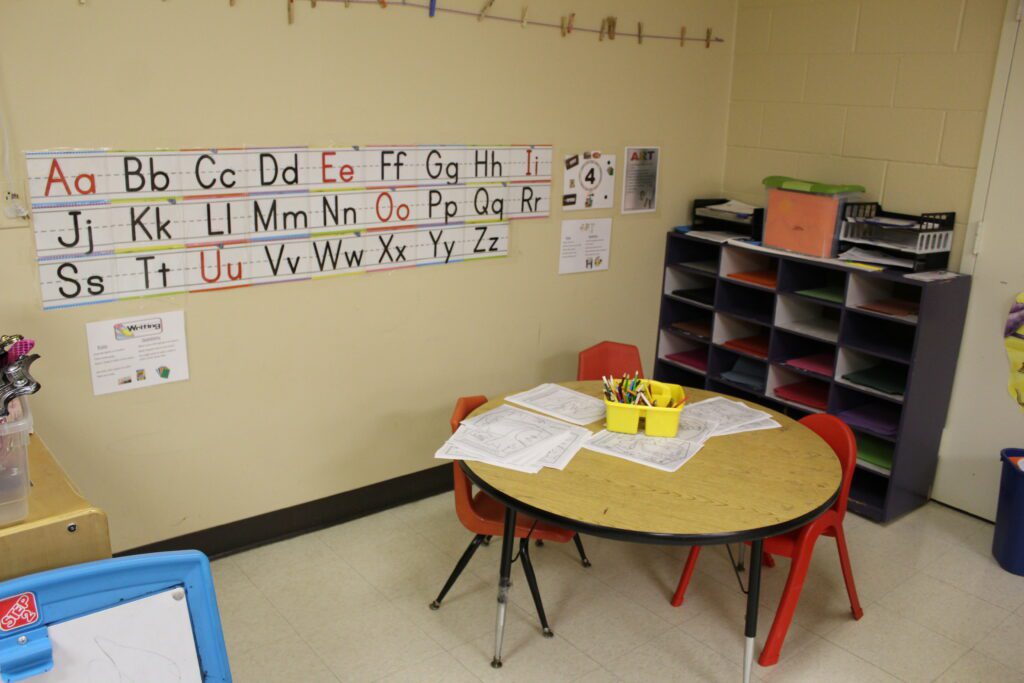
A Literacy and Writing center can be organized in many ways. It can be created by designating a space, combining it with your library area, or simply setting out literacy boxes on a table if classroom space is an issue. It’s important to include print materials such as books, magazines, and a variety of writing materials and instruments in every interest center. This allows all children to practice literacy and writing activities daily and provides many opportunities to explore these skills through hands-on, independent practice. In order to create a space designated for focusing on literacy and writing activities, you will need to incorporate:
- Child-size table and chairs,
- Activities and games, and
- Variety of writing materials.
This provides children with a space to practice writing or complete literacy activities and games. To promote the development of fine motor skills, stock the center with paper and pencils, chalkboard and chalk, dry-erase boards, markers, and crayons. Hang pictures and posters of the alphabet, numbers, environmental print, and basic words to give preschoolers visual cues for reading and writing. Pocket charts can also be used in this area with word cards and sentence strips to improve vocabulary and letter and word identification. Whether in a center or through literacy boxes, providing a variety of these materials helps children develop a wide range of literacy and fine motor skills.
Math and Manipulatives
In this center, children will have opportunities to enhance their hand-eye coordination, work on problem-solving skills, and engage in counting, sorting, patterning, classifying, sequencing, spatial awareness, and measurement. It allows children to work on identifying and matching colors, shapes, textures, and sizes. Providing hands-on activities and materials around these types of skills will benefit children in their future endeavors by preparing them for more advanced math skills.
Manipulatives to include in this area are age-appropriate table blocks and construction toys such as interlocking plastic blocks, gears, and small wooden table blocks. To improve dexterity, include activities such as lacing cards, dressing frames, and stringing beads. Children love to explore by taking things apart and putting them back together again. To meet this need, include puzzles, nesting boxes, and snap-together materials. Setting out play-dough or clay without tools, such as cookie cutters, encourages children to squeeze, knead, and roll while strengthening small muscles.
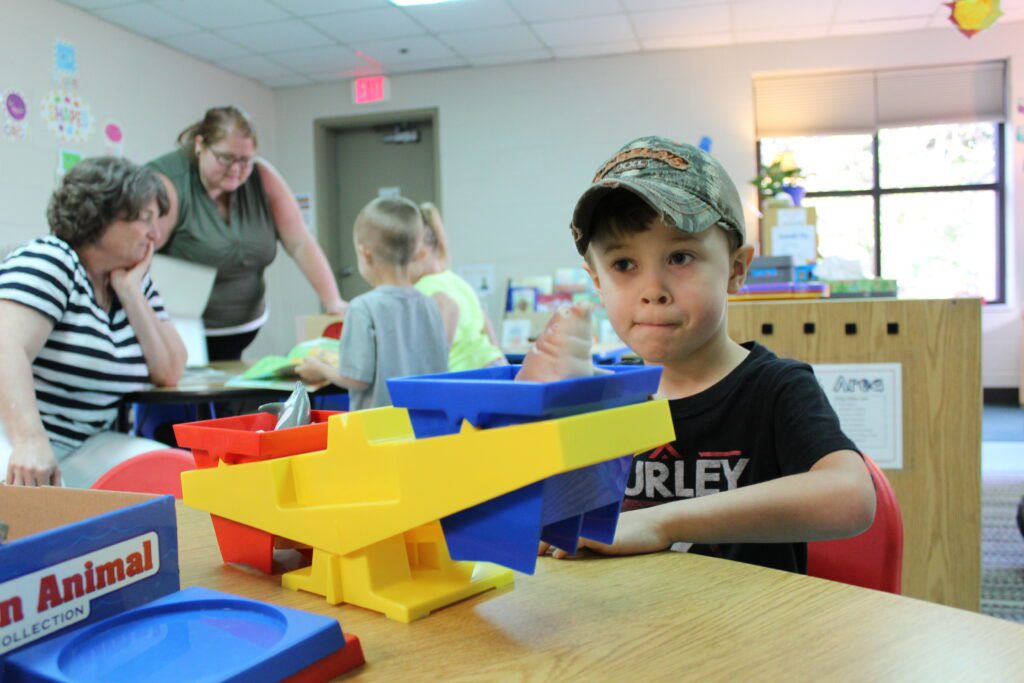
Math materials to add to this center include sorting and counting items such as nuts and bolts, keys, colored cubes, counting bears, and plastic lids. Include measuring tapes, rulers, and balances assist in developing measuring skills. Adding in simple games like lotto, checkers, cards, and board games can improve both math and manipulative skills.
Using the Toys and Materials list, make a list of at least three new materials you could provide in the math and manipulatives area.
Music and Movement
Teachers who work with young children educate the whole child, which includes not only the thinking and feeling aspects of the child, but also the moving child.
Pica, 2009
Incorporating a space for a clearly defined and well-organized Music and Movement center allows children to experience different types of music, encourages them to make their own music, and engages them in large-muscle movement activities. This area needs a wide variety of materials, such as a CD player and CDs, musical instruments, ribbons, shakers, and streamers. The music and movement area provides opportunities for children to work on balance, coordination, creative movement, and to experiment with sound.
Children appreciate the time and freedom to be creative and to expend their energy. This area is especially important on days when inclement weather, such as rain and cold, precludes outdoor play. By providing opportunities for activities such as chanting, imitating sounds, and clapping in time, children improve their listening and motor skills. This area lends itself to introducing children to a variety of music from different cultures, especially in the classroom. The best music and movement activities are independently chosen so they are enjoyed for the experience itself. When interesting activities are offered daily, even reluctant children are more willing to join in over time.
Establishing Routines and Transitions
How you organize your time in your classroom is just as vital as the design and organization of your space. Children require time each day to play, eat, interact, rest, and engage with materials. You must have a plan!
Children are more engaged with activities during free-choice time than during teacher-structured activities. In free-choice time, preschoolers were also more engaged with their peers.
Vitiello et al., 2012
A daily schedule is the framework for the day. It gives families a peek inside a child’s day, including their routines. Schedules are essential and include:
- Arrival
- Bathroom
- Meals
- Large and small group activities
- Cleanup
- Nap and departure times
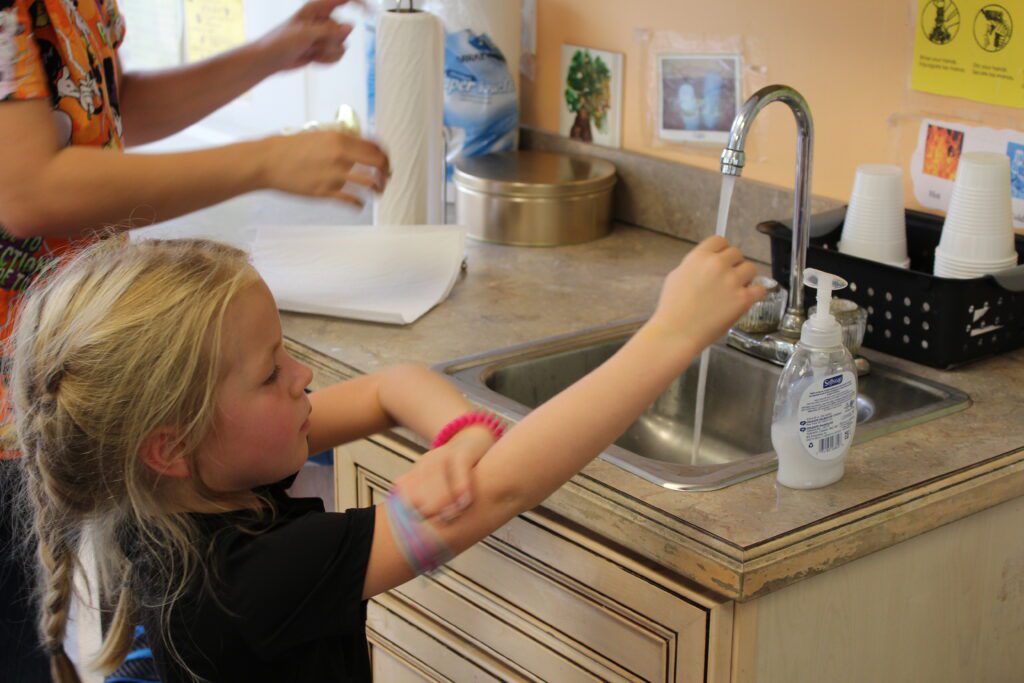
Routines should be simple and easy to remember. It is up to the teacher to ensure children know the routines and that they are implemented into the schedule.
Throughout the day, you will need to transition children from one routine or activity to another. These transitions are an unavoidable and necessary part of the day. During these times, it is important to minimize wait time as much as possible.
An effective preschool classroom provides opportunities for children to pursue their own interests and engage in both indoor and outdoor play. An easy way to accomplish this is to allow children free choice, letting them decide where to play.
A considerable part of the day should be spent in free-choice time. For example, children who spend 8 hours a day in a program need at least 1 hour of indoor free-choice time and 1 hour of outdoor time. Outdoor time should be broken up into 30-minute sessions in the morning and afternoon, weather permitting.
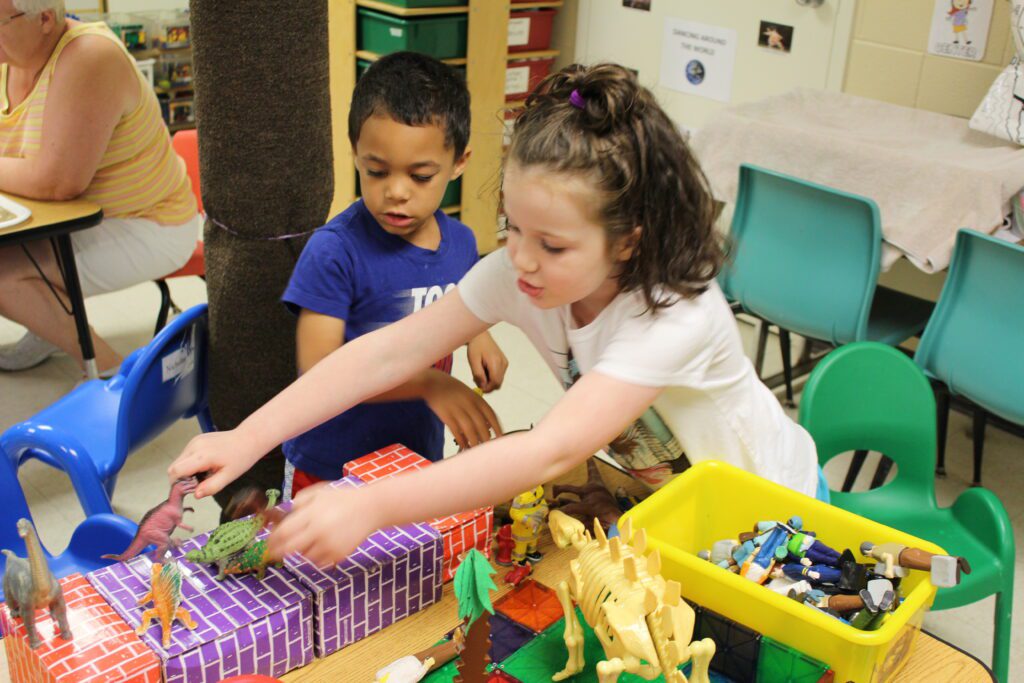
Many of the same materials you provide indoors for free-choice can be used outdoors. Consider bringing out discovery items, a sensory table, writing implements, a basket of books, dramatic play props, and blocks. Small-group activities allow children to focus on specific learning objectives. Activities can include experiments, art projects, cooking, and other activities that require extra adult supervision. Free play is a great time to include these activities.
The key is to keep it short, normally, between 15 and 20 minutes or less. In the end, all of these guidelines work together to produce an environment that is developmentally appropriate -where children grow physically, socially, emotionally, and cognitively. Where children feel comfortable, safe, and secure.
Research has shown that children engaged in these types of developmentally appropriate classrooms are less stressed, better creative thinkers, and better communicators.
Whether you’re starting a classroom from scratch or adding to the one you have now, applying these guidelines will help you create a classroom that is fun, effective, and supports positive child outcomes.
Wrap Up and Resources
Environments that have been carefully and effectively arranged and maintained can significantly increase positive peer-to-peer interactions.
Bovey, T., & Strain, P. 2005
If you would like free technical assistance with your room arrangement, contact your Child Care Aware Quality Coach. If you have any further questions about this online module or course credit, contact Inspire Learning Hub.
Resources
References
- Curtis, D., & M. Carter. 2003. Designs for Living and Learning: Transforming Early Childhood Environments. St. Paul, MN: Redleaf
- Dodge, D., Colker, L., & Heroman, C. 2002. The Creative Curriculum for Preschoolers 4th edition, Washington, DC: Teaching Strategies
- Greenman, J. 1988. Caring spaces, Learning Places: Children’s environments that work. Redmond, WA: Exchange Press.
- Elkind, D. 2007. The Power of Play. Boston, MA: Da Capo Press.
- Isbell, R. 1995. The Complete Learning Center Book. Beltsville, MD: Gryphon House.
- Isbell, R., & B. Exelby. 2001. Early Learning Environments That Work. Beltsville, MD: Gryphon House.